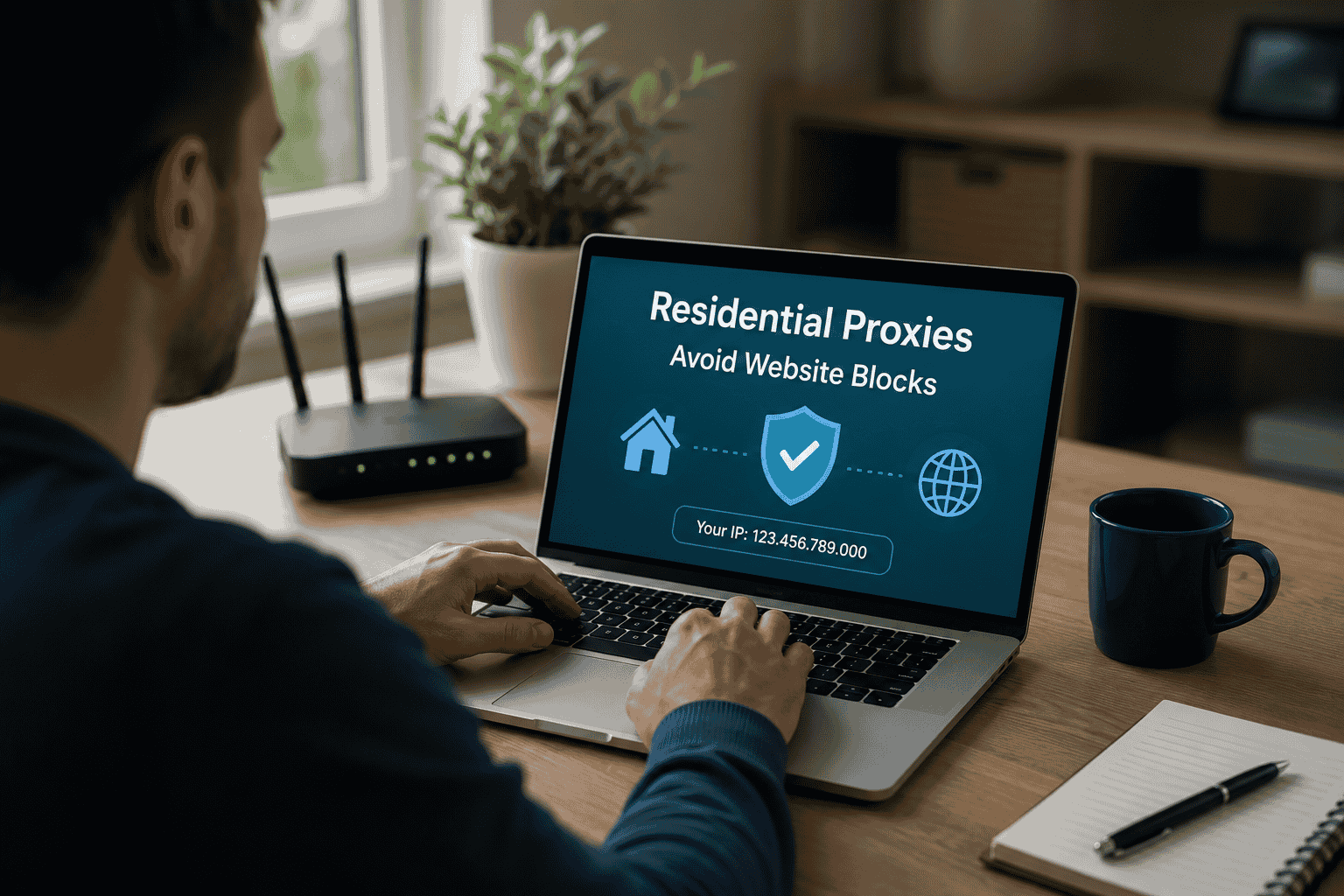
Blocking while browsing online or gathering data online is something several people experience at some point. When doing research, comparing prices, or just trying to get a page repeatedly, websites typically come with mechanisms to identify and prevent odd activity. These systems are built to defend servers from being overloaded, to prevent scraping and to prevent abuse, but they can also make ordinary applications much more difficult. This is where residential proxies come in and provide a practical option to bypass these blocks and keep your work moving effortlessly throughout your site.
Repeated Requests and IP-Based Blocking
Repeated requests originating from a single IP address are one of the top reasons websites block users. If somewhere on the site detects that one IP is sending too many requests in a short period of time, it might take it for granted that the behaviour is a robot of sorts. Therefore, it can temporarily block access from the IP, give captchas, or ban the IP altogether. The issue can be remedied with residential proxies, which deploy requests over various IP address domains. The activity is spread out, so it doesn’t exactly feel like it comes from one source, but instead seems to come from multiple real users. This makes it considerably less likely for the system to raise suspicion of the behaviour.
Importance of Real Residential IPs
And the specific IP ID that is being used is also quite significant. Data centre proxies are easily recognisable on many popular websites and are blocked on the spot as they are frequently linked to bots and automation tools. Residential proxies instead work from IP addresses allocated by Internet service providers to actual homes. These IPs resemble typical users browsing on home networks and, therefore, are exponentially more difficult to identify and block. This natural appearance is instrumental in keeping websites available and accessible.
Behaviour-Based Detection
Websites also use behaviour patterns to detect threats. If a person clicks through pages at a faster rate, refreshes content over and over again or touches the same kind of data repeatedly, it will probably trigger security systems. This pattern becomes apparent if you’re using a single connection. Residential proxies mitigate this risk as they offer a range of requests from multiple locations and devices to enable more realistic browsing behaviour. This allows the activity to be embedded with normal user traffic instead of focusing on itself.
Geographical Restrictions
Geographical limitations may lead to the website being blocked. Other platforms restrict access according to where the user is, whether it comes from following the law or to control how an individual’s content is spread across the user base. In a few cases, going through region-locked information multiple times from outside the allowed area can lead to temporary access blocks. Residential proxies serve as IP addresses of IP addresses that are based on their location, providing an address in another physical geographic region, which can render that content as if you were a physical presence in that location. Not only does this prevent you from blocking users, but it also means you can see the proper version.
Session Tracking and Identification
Another technique websites use is session tracking. Even if your IP address changes, sites can track cookies, browser fingerprints or session data to detect patterns of activity and keep tabs on a new friend’s habits. Although proxies do not solve all the challenges, residential proxies reduce one of the biggest tracking factors by hiding the IP address. That really lowers the odds of being blocked on extended sessions when combined with careful browsing.
Avoiding Rate Limits
Avoiding rate limits is critical for people who want to access large amounts of data. Many sites put strong restrictions on how much data one can request at any time. Overstepping the limits frequently results in temporary restrictions or full blocks. Residential proxies work to circumvent these constraints by spinning IP addresses, so more requests can be made without being subject to constraints. This enables more efficient information gathering without persistent interruptions.
Automation and Detection Prevention
Similarly, tools that automate tasks can also put you at higher risk of being blocked, because they usually request information much more quickly than a human would. Unprotected, this type of activity is relatively easy for websites to detect. Residential proxies improve the security of automation by spreading those requests over a variety of IPs, which leads to more traffic as it doesn’t automatically detect it, so not detecting it, and it’s likely to look like normal traffic. This enables tools to perform efficiently and remain hidden behind the scenes.
Responsible Usage
However good these benefits might be, it also helps keep the fact that avoiding website blocks does not equal subverting, abusing or violating the rules of the web page. Residential proxies perform best when used responsibly, in terms of the terms or conditions imposed upon them, and don’t become harmful. Their function is to assist the user in overcoming technical limitations and gain information more reliably, rather than taking advantage of the system unjustly.
Conclusion
Finally, residential proxies deliver an effective defence against website blocking because they are able to send out traffic, use real IP addresses, and create a more organic browsing profile. They allow users to remain under detection levels, ignore geographical restrictions and process thousands of requests without a hitch. Used well, they make online activities a lot easier, faster, and many times less frustrating for anyone who relies on reliable and persistent access to websites.